Cohort 4 · March 2026 · 40 Seats

Teach Machinesto See.Understand Every Layer.

A 12-week intensive for engineers who are tired of copying PyTorch snippets they don't understand. Ship a production-grade object detection pipeline. Deploy it on edge hardware. Know exactly why it works.

Software EngineersML EngineersRobotics Teams
facevehicletumordefectdronescan

epoch 47 / loss

0.0312 ↓

mAP@0.5

97.3%

0.0%

Best project mAP

0

Shipped projects per cohort

0+

Engineers trained

0ms

Fastest edge deployment

PyTorch
YOLOv8
OpenCV
ONNX
TensorRT
Roboflow
Ultralytics
Detectron2
Hugging Face
Jetson Nano
CUDA
NumPy
Albumentations
WandB
Label Studio
EfficientDet
U-Net
DETR
PyTorch
YOLOv8
OpenCV
ONNX
TensorRT
Roboflow
Ultralytics
Detectron2
Hugging Face
Jetson Nano
CUDA
NumPy
Albumentations
WandB
Label Studio
EfficientDet
U-Net
DETR
01Student Projects · Shipped

Not Exercises.
Production Pipelines.

Every card is a real system a student built and deployed. Hover to see the architecture, dataset, and accuracy.

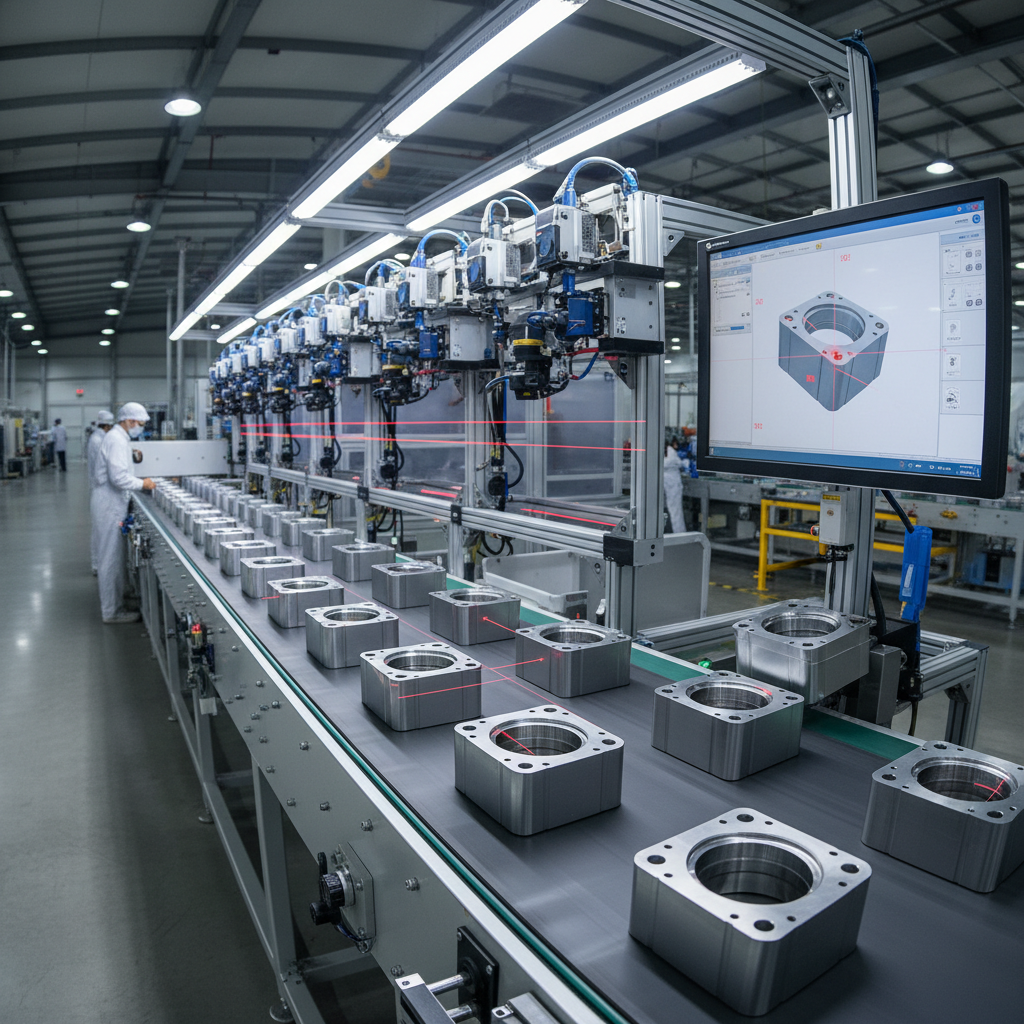
Industrial conveyor belt with automated inspection system detecting surface defects on metal components
crack_0.94
MANUFACTURING
Week 8 Project

Surface Defect Detection

Catching micro-cracks at 120 fps on a conveyor belt

hover to see results
Results

Surface Defect Detection

ArchitectureYOLOv8-nano
Dataset14,200 annotated images
Accuracy97.3% mAP@0.5
Precision96.1% precision

Marcus Webb

Senior SWE, Bosch
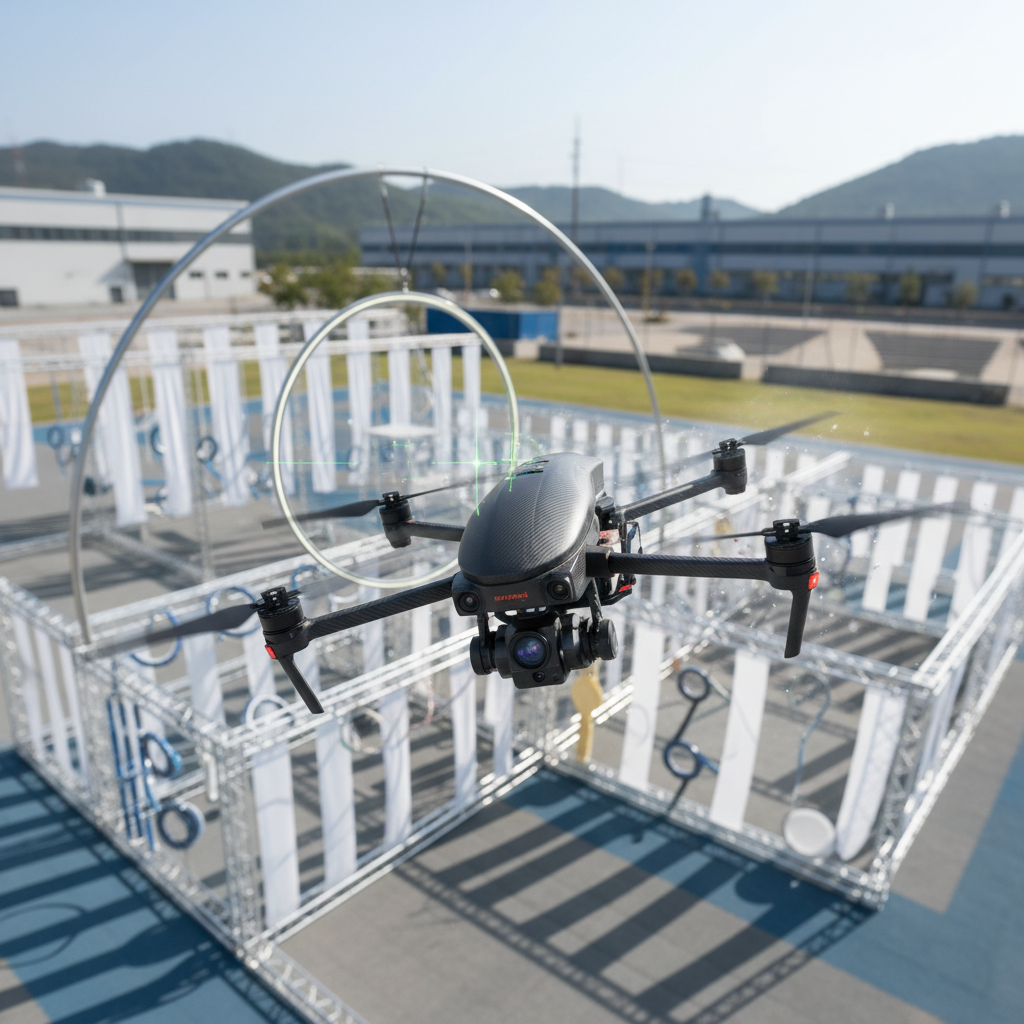
Aerial drone flying through obstacle course with computer vision navigation system active
obstacle_0.91
AUTONOMOUS NAVIGATION
Week 10 Project

Drone Obstacle Avoidance

Real-time depth estimation and path planning at 30m/s

hover to see results
Results

Drone Obstacle Avoidance

ArchitectureEfficientDet-D2 + MiDaS
Dataset8,700 stereo pairs
Accuracy94.8% mAP@0.5
Precision12.4ms inference

Priya Nair

Robotics Lead, Zipline

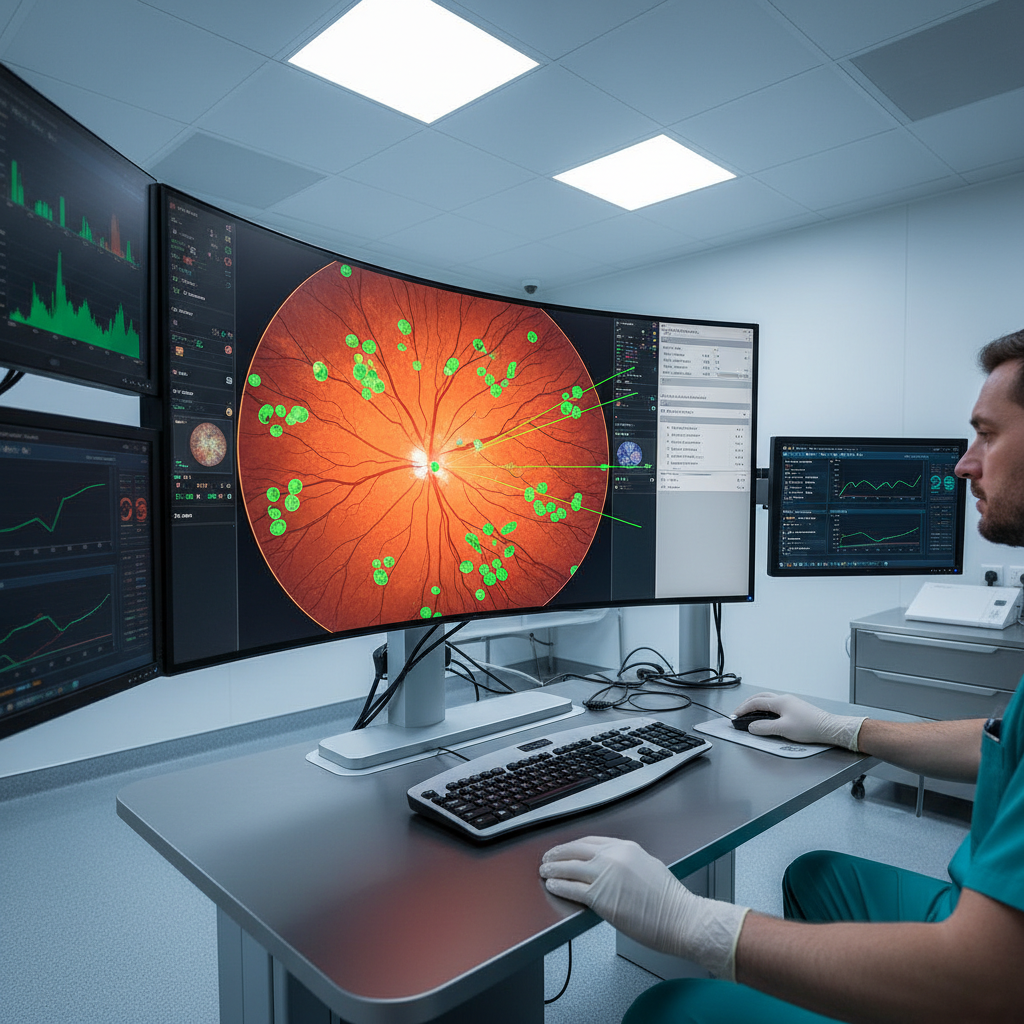
Medical imaging workstation displaying retinal scan with AI-detected lesion annotations highlighted in green
lesion_0.89
MEDICAL IMAGING
Week 11 Project

Retinal Lesion Segmentation

Grading diabetic retinopathy from fundus photographs

hover to see results
Results

Retinal Lesion Segmentation

ArchitectureU-Net + ResNet-50
Dataset3,662 labeled scans
Accuracy0.91 Dice coefficient
PrecisionKappa: 0.87

Dr. James Okafor

ML Eng, PathAI

Retail Analytics

Shelf Occupancy Detection

93.7% mAPYOLOv8-s
Aisha Okonkwo · ML Eng, Walmart Labs
Agriculture

Crop Disease Segmentation

0.88 DiceDeepLabV3+
Tomás Herrera · SWE, John Deere
Security

Anomaly Detection in CCTV

91.2% AUCVideo Transformer
Yuki Tanaka · Senior SWE, Verkada

12 shipped projects per cohort · All source code available to graduates

02Curriculum · Skills to Build These

The Skills Behind
the Projects Above.

Each module is reverse-engineered from a real shipping requirement. No filler lectures.

Weeks 1–2

Pixels to Tensors

Build intuition for image representation — color spaces, convolution from scratch, and why 3×3 kernels matter more than you think.

NumPy image opsManual convolutionGradient descent on images
Edge detector from scratch
Weeks 3–4

CNN Architecture Internals

Dissect ResNet, VGG, and EfficientNet layer by layer. Visualize activations. Build a feature extractor you actually understand.

Receptive fieldsBatch normalizationFeature visualization
Custom classifier: 94% on CIFAR-10
Weeks 5–6

Object Detection Fundamentals

Anchor boxes, IoU, NMS — the primitives behind every production detector. Implement YOLO's loss function before you use it.

Anchor box designIoU & NMSDetection loss functions
Single-class detector: 91% mAP
Weeks 7–8

Production Detectors

YOLOv8, EfficientDet, DETR. When to use which. Fine-tune on custom data. Avoid the annotation traps that kill real projects.

Transfer learningData augmentation pipelinesLabel studio workflows
Industrial defect detector: 97.3% mAP
Weeks 9–10

Depth & 3D Perception

Monocular depth estimation, stereo vision, and point cloud processing. Build the spatial understanding robotics teams pay for.

MiDaS depth estimationStereo calibrationPointNet basics
Drone obstacle avoidance pipeline
Weeks 11–12

Edge Deployment

ONNX export, TensorRT optimization, Jetson Nano deployment. Shrink a 100ms model to 8ms without destroying accuracy.

ONNX & TensorRTQuantization (INT8)Jetson deployment
Edge pipeline: 8ms inference
03Instructors · Peer-Reviewed Credentials

Taught by People
Who Ship, Not Just Publish.

Dr. Elena Marchetti, computer vision researcher and lead instructor, professional headshot in laboratory setting

14

Papers Published

800+

Students Trained

9

Industry Years

Dr. Elena Marchetti

Lead Instructor

Former Research Scientist, NVIDIA Research

Elena spent seven years building perception stacks for autonomous vehicles at NVIDIA before pivoting to teaching. Her course at CMU's MCDS program ran three cohorts before she launched Perceive. She ships code before she writes slides.

Selected Publications

[1]

Efficient Multi-Scale Feature Fusion for Real-Time Object Detection

CVPR · 2022

[2]

Quantization-Aware Training for Edge Deployment of Detection Networks

ICCV · 2023

Rahul Krishnamurthy, principal ML engineer and curriculum architect, professional headshot in modern office

8

Papers Published

23

Models Deployed

11

Industry Years

Rahul Krishnamurthy

Curriculum Architect

Principal ML Engineer, Waymo (prev. Google Brain)

Rahul designed the perception evaluation framework used by Waymo's sensor fusion team. He believes the gap between academic CV and production CV is a pedagogy problem, not a research problem — and built this curriculum to close it.

Selected Publications

[3]

Scalable Annotation Pipelines for Autonomous Driving Datasets

NeurIPS Workshop · 2021

[4]

Cross-Domain Adaptation for Adverse Weather Perception

ECCV · 2022

04Program Details

What 12 Weeks Looks Like

8 hrs / week

4 hours of async lecture, 2 hours live Q&A, 2 hours project work. Designed around an engineering schedule.

12 Projects

One shipped project per week. Graded on accuracy, latency, and code quality — not just completion.

Edge Hardware

Jetson Nano kit included. You deploy on real hardware — not a Colab notebook.

40-Seat Cohort

Small enough for direct instructor access. Large enough for peer review that actually helps.

05Enroll · Cohort 4

You've seen twelve shipped systems.
Build yours.

March 2026 cohort. 40 seats. Application is two questions — no resume, no interview.

1
2
Your info

Reserve Your Seat

Cohort 4 opens March 2026 · 40 seats total

No payment required to reserve · Refundable deposit at enrollment

Download the Full Syllabus

48 pages. Every lecture topic, every paper on the reading list, every project rubric. If you want to see exactly what 12 weeks covers before committing, this is it.

  • Week-by-week lecture breakdown
  • Full paper reading list (42 papers)
  • Project rubrics and grading criteria
  • Hardware requirements for edge deployment

Email only · No follow-up sequences